Transport ADR.
(a) Transport. General of the contract of carriage. Transport activity. Road transport contract. Subjects involved. Professional training of freight forwarder.
1. o Transport.
For the purposes of the current rules on the transport of dangerous goods, “transport” is any road transport operation carried out in whole or in part on public roads, including loading and unloading activities of dangerous goods.
Transports carried out entirely within the perimeter of a closed site, e.g. a port, airport, factory, quarry, landfill, etc. are not included.
Transport may be carried out either by the hazardous waste company itself to the transfer plant, or by an undertaking managing this type of waste which acquires its ownership, or by a transport undertaking which does not acquire ownership of the waste.
They shall have the status of producers or managers of hazardous waste for the purpose of applying their liability under the Waste Act. There must always be a waste holder.
The shipment of hazardous waste can be classified by the mode of transport used: pipeline, boat, train, aircraft or truck, which can coincide on a route leading to multimodal transport.
Transport classes can also be differentiated by the things transported, according to the sectoral regulations applicable to each one. Some problems of interpretation arise: would hazardous waste transported for recycling or reuse be considered as goods, then assimilated to raw materials - goods? No: considering them raw materials would mean their exclusion from the Waste Act regime.
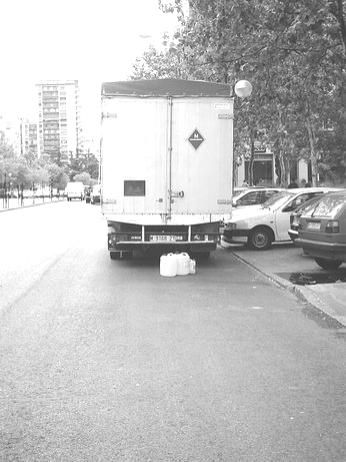
PHOTO: Delivery of fractional load (home delivery).
In this case the legal responsibility for unloading is the carrier.
2. General of the contract of carriage.
The simplest scenario would be the case of contracting - for the shipment of waste - with a transport company, which is only obliged to deliver the goods covered by the contract, under the responsibility of the producer of the waste. In the contract of carriage, a person - carrier - is obliged, in exchange for a price, to transfer from one place to another a particular asset or person, or both at the same time.
The civil regime for transport contracts is laid down in Articles 1601 to 1603 of C. v.
For its part, the commercial contract of carriage is defined in accordance with article 349 of the Commercial Code: “The contract of carriage by land (. . . .) of any kind shall be considered commercial: 1o When it has as object goods or any effect of trade. 2nd When, being any object, the carrier is a trader, or is habitually engaged in verifying transport for the public”.
To distinguish which kind of contract - civil or commercial - is applicable in our case, the “object criterion” to differentiate the civil contract of carriage, from the commercial one is not valid (all movable things can be subject contracts, both civil and commercial).
The “Criterio de la Empresa” (Criteria de la Empresa) should be approached, focusing on the aspect of normality in the activity, with the carrier being understood as the person who exercises a company specially organized to carry out the transport.
In order to dispel any doubts about the applicable regime - civil or commercial - it can be argued that the production processes generating these wastes are due to an industrial activity, to which a commercial regime is of course applied in its procurement.
3. o Transport activity.
Transport is a major function in economic and social life. This is a professional activity that gives rise to specialized companies.
It is controlled by the State, both for technical reasons and for the importance it has as a public service. It follows an authorisation regime, which subject these transports to strict control in order to maintain market conditions for the protection of the sector itself and with a second objective of road safety.
The trend is the international homogenization of provisions allowing trade and free trade, which has led to the direct application of European Conventions to our domestic law.
Article 62 of the Land Transport Planning Act (L. O. T. T. ) It classifies road transport, according to its nature, in public and private: Public transport is those carried out by employed persons through financial compensation. Private transport is carried out on its own account, either to meet particular needs or to complement other main activities carried out by undertakings or establishments of the same subject, and directly linked to the proper development of such activities.
In Spain, Title VII of the second book of C. de c. is the basic regulation applicable to the contract of carriage, in its private aspect. It is referred to as “The commercial contract for land transportation” and primarily regulates the transport of things.
Along with these rules, there are other – administrative – rules that invade the field of private law. Here the authority reserved by the Administration to approve standard contracts is of particular interest,[57] that they have the applicable standard value in the absence of an explicit agreement by the parties. The Waste Act itself makes it compulsory for a contract to be in place to carry out the transport.
In addition, special authorizations may be required. The general system of authorization in transport is developed by Law 16/1987 of 30 July on the Planning of Land Transport. (BOE 182, 31 July 1987: arts. 90 et seq.).
Article 90. 1 LOTT “Discretionary public transport of goods (. . . ) by road may only be carried out by persons who meet the requirements set out in Art. 48 and have obtained the corresponding administrative authorization to enable such realization. ”
These requirements are:
- To comply with the requirements laid down in Article 42 (1).
To fulfil the fiscal, labour and social obligations required by the legislation in force.
- To fulfil, where appropriate, those specific conditions necessary for the proper provision of the service or performance of the activity, which are expressly established in relation to the different classes or types of qualification.
Subsection 8. 1. 2. 2 (d) of the European ADR Convention lists among the documents to be kept in the vehicle carrying dangerous goods: “the permit with the authorization to transport. ” (for the transport of explosives: guide to explosives, organic peroxides, self-reactive substances with T. D. A. A. – Self-accelerated Decomposition Temperature).
In the case of hazardous waste, the authorisation regime of the Waste Act applies for transport. [58]
4. o Road Transport Contract.
The contract of carriage is concluded by the consent of the parties. Written form is required. The carrier - carrier - enters into a contract with the shipper (dispatcher of dangerous substances, in terms of ADR, or producer of hazardous waste in terms of waste legislation), and a third party usually appears to whom the goods are addressed, which is the consignee or consignee (in the case of transport of hazardous waste, it would be for example the company that has a transfer centre, a hazardous waste incinerator, or a safe deposit-filler).
The carrier is directly responsible for carrying out the carriage. The mode of carrier plurality, known as combined service transport or cumulative transport, may also occur in which several carriers are obliged under the same contract to carry the cargo to the destination point (373 C. de c).
There may also be plurality of consignors or plurality of recipients. It is the so-called fractional cargo transport. This is a very common option for hazardous waste collectors in small industrial centres. In this case it is the carrier that has the responsibility to carry out the loading and unloading, unless otherwise specified in the contract. The difference in the transport of complete cargo, where the responsibility for loading and unloading of the goods lies with the consignor or consignee.
The shipper or sender is the person who contracts with the carrier on his own behalf and delivers the cargo for carriage or is obliged to deliver it. And consignee or recipient is the person to whom the objects transported are addressed. [59]
5. o Professional training of freight forwarder.
Any carrier must have professional training for its activity. The issue of certificates of professional training is regulated by Order of 28 May 1999 implementing Chapter I of Title II of the Regulations of the Land Transport Management Act (R. O. T. T. ), on the issue of vocational training certificates. The R. O. T. T. concerns the conditions for obtaining such certificates in accordance with the specifications laid down by Council Directive 96/26/EC of 29 April 1996 on access to the profession of freight carrier.
The training of these professionals includes a section dedicated to: 7. 8 “Safety in the transport of dangerous goods”, as set out in the following agenda:
a. Accident prevention and measures to be applied in the event of an accident.
b. Types of certifications available for drivers carrying dangerous goods according to the classification of dangerous goods and the types of vehicles to be used, duration and validity of such certificates and mechanisms for their renewal.
c. Rules for the transport of dangerous goods relating to the safety of transport operations and the handling of loading and unloading, packaging and packing of goods, marking of packages and inspection and approval of vehicles.
d. Movement rules and traffic restrictions relating to the transport of dangerous goods.
The special regime for ADR transport is therefore known to all carriers, just as all drivers of vehicles with a B or C driving licence have the section on dangerous goods on their agenda in motor schools.
Therefore, to carry out transport of hazardous waste, which are also dangerous goods under the ADR Agreement, the Environmental Authorities of the different Autonomous Communities.
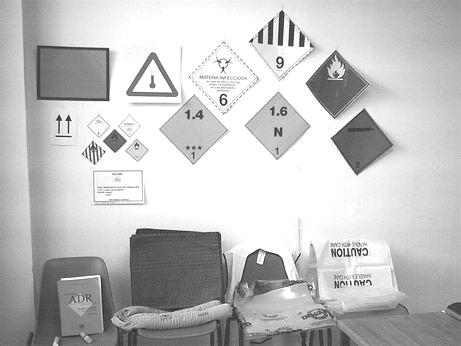
PHOTO: dangerous goods training classroom.
(b) Application of the International ADR Convention to the domestic sphere. History and structure. Exemptions. Signaling and labelling. Documents to be carried on board. Letter of carriage. List of checks for loading dangerous goods.
1. or Application to the domestic scope of the International ADR Convention.
It has already been explained that the ADR Agreement applies in Spain, replacing the previous TPC regulation:
Article 1. 1 RD 2.115/1998 Scope and definitions “The rules of the European Agreement on the International Carriage of Dangerous Goods by Road (ADR) shall apply to transport carried out entirely within the national territory, without prejudice to the provisions of hazardous waste legislation. ”
The scope of the regulation is limited by several points. The transport of dangerous goods by road carried out by the Armed Forces and Civil Guard is excluded from the scope of this Royal Decree. The ADR also does not apply to:
(a) the carriage of dangerous goods by private persons, where the goods in question are put up for retail sale and intended for personal or domestic use or for recreational or sporting activities;
(b) the transport of machinery or equipment not specified in ADR and involving dangerous goods in its structure or operating circuits in an accessory manner;
(c) transport carried out by undertakings, but in addition to their main activity, such as the provision of construction materials for works or civil engineering, or for measuring, repair and maintenance work, in quantities not exceeding 450 litres per container and the maximum quantities specified in marginal 10011 (Section 1. 1. 3. 6. 3 of the restructured ADR). Transport carried out by such undertakings for external or internal supply or distribution is not, however, affected by this exemption;
(d) transport by or under the control of intervention services, in particular by repair vehicles carrying damaged or damaged vehicles containing dangerous goods;
(e) emergency transport intended to save human lives or protect the environment, provided that all measures have been taken to ensure that such transport is carried out safely.
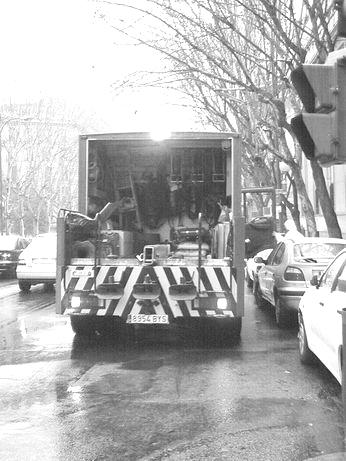
PHOTO: vehicle-workshop
2. o History and structure.
This would be the chronology of the most important milestones in the development of the ADR Agreement.
Year
Norma/event.
1957
ADR Europe Agreement (UN).
1968
It enters into force on January 29.
1969
It's published in the BOE.
1978
Los Alfaques accident.
1992
Royal Decree 74/1992. TPC.
1998
Royal Decree 2.115/1998 (replaced by Royal Decree 97/2014).
2001
Restructured version of ADR
2003 2005 2007
You're checking odd years.
IMAGE: ADR 2003.
Structure of the ADR:
The ADR includes two annexes: Annex A (Parts 1 to 7 ) which is developed in the image of the model UN regulation, therefore it is similar to the agreements that regulate the other modes of transport, and Annex B ( Part 8 and 9 ), which provides specific rules for road transport: crew, vehicles . . . . Each part divided into chapters and each chapter subdivided into sections and subsections, and these in sections. The highlights of each part are as follows:
Part 1. General provisions.
- Field of application.
Definitions and units of measurement.
- Staff training.
Obligations of the interveners.
- Exemptions.
- Transitional measures.
- Repeals.
Part 2. Classification.
- General provisions.
- Specific provisions of the classes.
- Tests and rehearsals.
Part 3. List of subjects.
- General.
- List of subjects and objects. (ADR key. )
- Provisions applicable to a particular subject or subject matter.
- Limited quantities.
Part 4. Use of packaging and tanks.
- Use of packaging, GRG and large packaging.
- Portable Cisterns for Classes 3 to 9.
- Fixed, detachable tanks, tankers, mobile cisterns, metal container-cysters and multi-element gas containers ( CGEM ).
- Reinforced plastic cisterns.
- Waste cisterns operating in the vacuum.
Part 5. Transport procedures.
- General transport provisions.
- Marking and labelling.
- Marking and marking of orange panel in containers, CGEM, container-cyster, portable tanks and vehicles.
- Documentation.
- Special provisions.
Part 6. Construction and testing of packaging, GRG, large packaging and tanks.
- Construction and testing of packaging.
- Construction and testing of gas containers, aerosols and gas cartridges.
- Prescriptions and tests of containers for Class 6. 2
- Prescriptions and testing of containers for Class 7.
- Requirements on the construction and testing of GRGs.
- Requirements relating to the construction and testing of large packagings.
- Requirements for the design, construction, control and testing of portable tanks.
- Requirements relating to construction, equipment, approval, testing, etc.
- Tanks and metal battery vehicles.
- Reinforced plastic tanks.
- Of waste tanks operating in the vacuum.
Part 7. Provisions on the conditions of transport, loading, unloading and handling.
- General provisions.
- Transport in packages.
- Bulk transport.
- Tank transport.
- Loading, unloading and handling.
Part 8. Provisions relating to crew, equipment and vehicle use and documentation.
- Transport units and onboard equipment.
- Training of the crew of vehicles.
- Vehicle crew.
- Surveillance of vehicles.
- Additional provisions relating to particular classes or goods.
Part 9. Construction and approval of vehicles.
- Construction and approval of vehicles.
- Construction of base vehicles.
- EX/II and EX/III vehicles.
- Box vehicles.
- Bulk vehicle boxes.
- Vehicles with temperature regulation.
- FL, OX and AT carrier vehicles.
-
3. o Exemptions for the application of the ADR.
Transport in packages in quantities less than those specified in paragraph 1. 1. 3. 6. 3, implies exemption from many ADR obligations.
The rule is that where dangerous goods of the same category of transport, as defined in the table, are transported in the same transport unit, the maximum total quantity per transport unit is indicated in that table:
Category of transport 0
Class 1: 1. 1A/1. 1 L/1. 2 L/1. 3 L/1. 4 L and UN 0190
Class 3: UN 3343
Class 4. 2: materials belonging to packing group I.
Class 4. 3: UN 1183, 1242, 1295, 1340, 1390, 1403, 1928, 2813, 2965, 2968, 2988, 3129, 3130, 3131, 3134, 3148, 3207.
Class 6. 1: UN 1051, 1613, 1614, 3294.
Class 6. 2: UN 2814, 2900 (risk groups 3 and 4).
Class 7: UN from 2912 to 2919, 2977, 2978, from 3321 to 3333.
Class 9: UN 2315, 3151, 3152 and apparatus containing such materials or mixtures, as well as empty uncleaned containers containing materials in this category of transport.
Total maximum quantities per transport unit: 0.
Category of transport 1
Materials and articles belonging to packing group I and not included in transport category 0, as well as materials and objects of classes:
Class 1: 1. 1B a 1. 1ha/ of 1. 2B a 1. 2J/ 1. 3C/ 1. 3G/ 1. 3H/ 1. 3J/ 1. 5Da.
Class 2: T, TC*, TO, TF, TOC and TFC aerosol groups: C, CO, FC, T, TF, TC, TO, TFC and TOC groups.
Class 4. 1: UN from 3221 to 3224 and from 3231 to 3240.
Class 5. 2: UN from 3101 to 3104 and from 3111 to 3120.
Total maximum quantities per transport unit: 20.
Category of transport 2
Materials and articles belonging to packing group II which do not appear in transport categories 0, 1 or 4, as well as materials and objects of classes:
Class 1: 1. 4B a 1. 4G/1. 6N.
Class 2: group F aerosols: group F.
Class 4. 1: UN from 3225 to 3230.
Class 5. 2: UN from 3105 to 3110
Class 6. 1: materials and articles belonging to packing group III.
Class 6. 2: UN 2814, 2900 (risk group 2).
Class 9: UN 3245.
Total maximum quantities per transport unit: 333
Category of transport 3
Materials and articles belonging to packing group III which do not appear in transport categories 0, 2 or 4, as well as materials and objects of classes:
Class 2: groups A and O aerosols: groups A and O.
Class 8: UN 2794, 2795, 2800, 3028
Class 9: UN 2990, 3072
Total maximum quantities per transport unit: 1. 000.
Category of transport 4
Class 1: 1. 4S.
Class 4. 1: UN 1331, 1345, 1944, 1945, 2254, 2623.
Class 4. 2: UN 1361, 1362 packing group III.
Class 7: UN 2908-2911.
Class 9: UN 3268.
As well as empty uncleaned containers containing dangerous substances, except those in category 0 of transport.
Maximum total quantities per transport unit: Unlimited.
Where dangerous goods belong to different transport categories and are transported in the same transport unit, the sum of the quantity of materials and objects in the transport category shall be:
- 1 multiplied by "50",
- 1 mentioned in footnote “a” in the lower part of table 1. 1. 3. 6. 3, multiplied by "20",
- 2 multiplied by "3", and
- 3, must not exceed "1000".
Five categories of transport are established: 0.1,2,3 and 4. (0 very dangerous, 4 less dangerous). Category 0 is not allowed for transport with such exemption, category 1 has a maximum of 20 (kg or litres), in category 2 can be transported with this system up to 333, in category 3 can be transported with this system up to 1. 000, in category 4, any amount. So it is necessary to determine to what class and division the hazardous residue belongs and see if it can be exempted from complying with the rest of the requirements of the ADR Agreement.
Transport carried out in quantities less than those mentioned above may be exempted from fulfilling the vast majority of ADR obligations and is bound only by the following:
- Chapter 1. 3;
- Chapter 5. 3;
- Section 5. 4. 3;
- Chapter 7. 2 except: 7. 2. 3, V5, V7 and V8 of 7. 2. 4; and CV1 of 7. 5. 11
- Part 8 except: 8. 1. 2. 1(a) y (c); 8. 1. 4. 2 a 8. 1. 4. 5; 8. 2. 3; 8. 3. 4; Chapter 8. 4; S1(3) y (6); S2(1); S4; From S14 to S21 of Chapter 8. 5.
- Part 9.
-
4. o Signaling and labelling.
----
----
The identification panels are placed in the transport unit and serve to determine the nature of the material transported and the danger it presents, if involved in an accident. This is a measure to assist relief services.
Transport units carrying dangerous goods shall bear, in a vertical plane, two of these retro-reflecting orange rectangular panels, the base of which is 40 cm and the height not less than 30 cm, with a black edge of 15 mm.
One shall be fixed at the front of the transport unit and the other at the rear, perpendicular to the longitudinal axis of the transport unit. They must be very visible.
Where appropriate, the hazard identification number shall be at the top of the panel and the material identification number shall be at the bottom. The number O. N. U. identifies each matter. Which is the one you use in all product identification documents, as well as in the labels of your packaging.
The hazard identification number consists of two or three figures. In general, the figures indicate the following dangers:
2 Emanation of gases resulting from pressure or a chemical reaction.
3 Inflamability of liquid materials (vapores) and gases or liquid matter susceptible to self heating.
4 Inflamability of solid matter or solid matter susceptible to self-heating.
5 Comburent (favors fire).
6 Toxicity or danger of infection.
7 Radioactivity.
8 Corrosivity.
9 Danger of spontaneous violent reaction.
0 No secondary danger
Non-repetition: increased risk.
X: Violent reaction with water.
As regards labelling, there are models of labels whose description is included in the ADR Convention itself. They must be attached on the packages and in some cases on the outside of the vehicle by changing to name plates-tags and increasing their size from 10 cm. to 25 cm. on the side.
In the vehicle, as a general rule the labels are placed behind and on the sides, and if there are several hazards, it is reflected with different labels. However, where dangerous goods carried in a container are of such a nature that one or more hazard labels must be affixed to packages containing such goods, the same or the same labels must be affixed on both sides and at each end of the container containing such goods in packages.
Labels which do not relate to dangerous goods transported or waste from such goods must be removed or covered, in order to avoid errors in the event of emergency services being involved. [60] The panels shall only be removed when the vehicle or transport device has been cleaned. It is the responsibility of the consignor (waste producer) to affix labels. And the carrier should put the right orange panels.
5. o Documents to be carried on board. [61]
• Letter of carriage, or you will order that it contains these words.
• Written instructions for the driver.
• Certificate of approval ADR for each transport unit or transport device (only for all transports of explosives or tanks).
• Certificate of driver training or administrative authorization.
• Certificate of crumbling of the container, i.e. placing the packages inside the container (if applicable).
• Certificate of tank cleaning (if applicable).
• Authorization to carry out transport (self-reactive, peroxide and explosive).
• Copy of the agreement that exempts ADR from compliance.
•
6. o Letter of carriage.
The contract of carriage, in practice, results in the issuance of a document known as a transport document “by which the content of which will be decided the answers that occur regarding its execution and performance, without admitting any exceptions other than those of falsehood and material error in its wording” (Article 353. 1 C. de c. ) For this type of transport – ADR - is mandatory. For other transport, a transport control document must be issued since 2003.
The transport document is issued in original triplet, signed by the sender and the carrier. One is for the sender, one accompanies the goods and another is for the carrier. The transport document must contain sufficient circumstances identifying the parts of the contract and the goods, describing them in the necessary detail, and the shipper must respond to the inaccuracy or inadequacy of the declaration.
In addition to being a proof document of the contract, it is also “traditional title” or representative of the goods transported, which allows them to be disposed of during the carriage, transmitting all rights to them through the circulation of the document. [62]
Each consignor may draw up a model of his or her own transport document with at least the following particulars:
(a) the UN number preceded by the letters “UN”;
(b) the official transport designation, supplemented where appropriate (see 3. 1. 2. 8. 1), with the technical name (see 3. 1. 2. 8. 1. 1), determined in accordance with section 3. 1. 2;
- For Class 1 materials and objects: the classification code indicated in column (3b) of Table A of Chapter 3. 2.
If in column (5) of Table A of Chapter 3. 2 lists label model numbers other than models 1, 1. 4, 1. 5 ó 1. 6, these label model numbers must be indicated in parentheses behind the classification code.
- For radioactive materials of class 7: see 5. 4. 1. 2. 5.
- For materials and objects of other classes: the model numbers of labels indicated in column (5) of Table A of Chapter 3. 2. In the case of multiple model numbers, the numbers following the first should be indicated in parentheses.
(d) where appropriate, the packing group attributed to the material which may be preceded by the letters “GE” (e.g. “GE II”) or the initials corresponding to the words “Packaging Group” in the languages used in accordance with 5. 4. 1. 5. 4. 1.
(e) the number and description of packages;
(f) the total quantity of each dangerous goods marked by their UN number, their official transport designation and a packing group (expressed in volume or gross weight, or net as appropriate);
(g) the name and address of the consignor;
(h) the name and address of the addressee;
(i) declaration in accordance with the provisions of any particular agreement;
The location and order in which the data will appear in the transport document can be freely chosen. However, (a), (b), (c) and (d) must appear in this order (a), (b), (c), (d) or in order (b), (c), (a), (d) without interspersed information elements, except those provided for in the ADR.
If waste containing dangerous goods (other than radioactive waste) is transported, the UN number and the official transport designation must be preceded by the word "RESIDUO[S]", unless the term is already part of the official transport designation. Examples of authorised description of hazardous waste:
• "Residue, UN 1230 methanol 3, II".
• “Residue, 3, II UN 1230 methanol”.
• "Residue, UN 1993 flammable liquid, N. E. P. (Toluene and ethyl alcohol) 3, II".
• "Residue, 3, II UN 1993 flammable liquid, N. E. P. (Toluene and ethyl alcohol)."
•
Framework for multimodal transport of dangerous goods
1. Consignor
2. Number of transport document (carnet)
3.
4. Consignor reference number
Page 1 of Pages
5. Reference number of the freight forwarder
6. Addressee
7. Transporter (to be completed by the carrier).
Declaration by the consignor
I declare that the content of this load is described below in a complete and accurate manner by the official transport designation and that it is correctly classified, packaged, marked, labelled, labelled and well-conditioned for all purposes to be transported in accordance with applicable international and national regulations.
8. This shipment satisfies acceptable limits for:
(refer to not applicable).
9. Additional information on handling
Passenger and cargo aircraft
Cargo aircraft
ONLY
10. Ship / Flight and date No.
11. Port/place of loading
12. Port/place of unloading
13. Destination
14. Issue marks
Number and type of packages; description of goods
Gross weight (kg)
net weight
Cubicage (m3)
15. Identification number of the container or vehicle registration number
16. Number of seals
17. Dimensions and type of
container/vehicle
18. Tara (kg)
19. Total gross weight
(including tare) (kg)
Skull/Load certificate
I declare that the dangerous goods described above have been stowed/ loaded in the container/vehicle identified above in accordance with applicable provisions**
To be completed and signed for all cargo in container/vehicle by the person responsible for ruckus control/loading
21. Received at the receipt of the goods
I received the number of packages/containers/trailers declared above in apparent good condition, except for the following reservations:
20. Name of the company
Name of carrier
22. Name of the company (DEL EXPEDITOR TO PREPARE THE DOCUMENT)
Name and position of the declarant
Vehicle registration number
Name and position of the declarant
Place and date
Signature and date
Place and date
Signature of the declarant
Driver signature
Signature of the declarant
** See 5. 4. 2.
Framework for multimodal transport of dangerous goods
1. Consignor
2. Transport document number (carnet)
3.
4. Consignor reference number
Page 2 of Pages
5. Reference number of the transit agent
14. Issue marks
Number and type of packages; description of goods
Gross weight (kg)
Net weight
Cubicage (m3)
7. o List of checks for the loading of dangerous goods.
The Company may indicate to its workers in writing the instructions containing the records for operations involving dangerous goods, e.g. loading, unloading, after an accident, discharge operations.
One manifestation of these is the list of checks presented as a model in Annex 2 to RD 2.115/1998. It is mandatory to carry out at least the checks described above but no document is required to prove it. It's not a mandatory document. Although it is likely to be interesting for quality, safety and environmental management purposes as a source of records for certification systems. Each Organization should have its own appropriate products and loading and unloading facilities available to it or its customers. It should be specific to hazardous waste in our case.
1. Documentation
q ITV Technical Inspection Card.
q Special authorisation of the driver.
q ADR certificate if the vehicle must carry it (Transport of explosives or transports in tanks).
q Cleaning document (required for tank loading in case of transport of material incompatible with the above).
2. Vehicle equipment status.
q Extinguishers depending on the maximum authorized mass of the vehicle. It must comply with both the ADR on fire extinguisher weights and the regulations of the Ministry of Science and Technology on effectiveness.
q Toolbox (it is not mandatory to wear it but it is interesting to make sure they are taken).
q Footwear, one per vehicle and suitable for wheel dimensions.
q Portable beacon lights, or alternately cones or triangles (usually triangles that are generally required for all vehicles).
q Personal protective equipment (e.g. gas mask for transport of toxic gases).
q Eye check of the good condition of the vehicle and its equipment.
3. Preload checks.
q Immobilisation of the vehicle (parking brake and straps if sloped).
q Connected earth intake (in tank transport of flammable liquids with flash point not exceeding 61 degrees Celsius).
q The relevant security equipment (e.g. emergency stop device, alarm devices, security showers, intervention equipment, etc.) is available at the loading station.
q Absence of work incompatible with safety in the vicinity of the loading site (e.g. welding work, oxy-staining work in the vicinity of a discharge of flammable liquid).
q Calculation of the degree of filling and the corresponding maximum load in tanks. (Following the calculations provided for in the ADR Agreement for each type of device depending on the expansion coefficient of each material.)
q Existence of residual cargo in tanks. (e.g. eye inspection or closed circuit television).
q Suitable indoor atmosphere in tanks (can be checked with explosimeters, chemical detectors: colorimetric tubes and electronic devices).
q Engine stopped (provided that it is not necessary for loading).
4. Checks during loading.
q Driver outside the cabin.
q Absence of leaks and spills.
q Smoking ban.
q Adequate filling speed in tanks (if applicable).
q Load arms or hose without tension.
q The maximum degree of tank filling is not exceeded.
5. Controls after loading.
q Load mouths closed.
q Absence of leaks and spills.
(a) Differential weight:
- Weight on the way out.
- Weight at the entrance.
- Net charged.
(b) Class 2 gases heavy:
- Theoretical weight empty.
- Weight at the entrance.
- Residual charge.
- Maximum permissible load according to degree filled.
- Residual charge.
- Maximum net weight to charge.
(c) Other control systems:
- Scale weight.
- Scale vehicle.
- Deposit level indicator.
- Indicator tank level.
- Empty cross or level rod.
- Volumetric counter.
- Inspection level fixed tank.
- Others.
q Pressure check, if applicable (Manometer).
q Placement of hazard labels.
q Orange panels with appropriate numbering.
q Discharge of excess goods, if any.
q Final ocular check of condition of tank service equipment.
q Letter of carriage from M. P.
q Instructions written for the driver.
q
(c) Classification of dangerous goods. Nature of dangerous materials and objects transported. Personal protective equipment. Packing. Separation of materials.
1. o Classification of dangerous goods.
Hazardous waste is treated like all other dangerous goods covered by the ADR and classified according to the degree of danger of its components.
The marking system is based on identification O. N. U. of the product. It consists of a number for each subject composed of four figures.
The 2003 ADR lists 2790 products from UN 0004 to UN 3376 in a table that is being updated periodically, from which products enter and leave. It may be that in earlier versions a product that is no longer dangerous is considered dangerous, leaving a gap between the UN numbers.
The hazardous product may also be considered for transport purposes in other modes. This means that it is dangerous for sea or air transport but not for road transport. So it is not included in the ADR list but it is included in the IMDG/IMO and ICAO/IATA.
The Restructured ADR lists all dangerous goods in a table with 2790 rows and 22 columns containing codes to determine the requirements for transport to be carried out:
Table A of Chapter 2. 3 of the ADR
Column
Content.
1
UN number.
2
Name and description.
3a
Class.
3b
Classification code.
4
Packing group.
5
Labels.
6
Special provisions.
7
Limited quantities.
8
Packaging instructions.
9a
Special packaging arrangements.
9b
Packaging in common.
10
Transport instructions in portable tanks.
11
Special provisions for portable tanks.
12
ADR tank codes.
13
Special provisions for ADR tanks.
14
Vehicle for transport in tanks.
15
Category of transport.
16
Special provisions - Bults.
17
Special provisions - Granel.
18
Special provisions - Loading and unloading.
19
Special provisions - exploitation.
20
Hazard identification number.
Table A incorporates at its top the references to find in the Agreement what it refers to with each of the codes, thus simplifying for those not initiated the handling of the Agreement.
In order to find a product, we initially go to Table B, which contains an alphabetical list – not official or exhaustive – of the products. And if it doesn't exist there, you go to rehearsals to frame them in families with similar dangers. The essays are based on the book of “methods and essays” published by the UN.
In the waste area, it is very common for products to be mixed or in solution, for which there are specific procedures in the ADR.
If the mixture contains only a dangerous goods subject to the ADR Agreement, it is considered as dangerous goods expressly indicated unless:
- Don't be anywhere else. E. P.
- It is not specified that the indications given are only for pure matter.
- The class, physical condition or packing group of the solution are different from that of dangerous goods.
If you have more than one type of danger, it must be classified in the prevailing class.
If there is no preponderant class the order will be:
1. Class 7.
2. Class 1.
3. Class 2.
4. Class 3 (disensitized explosives).
5. Class 4. 1 (disensitized and self-reactive explosives).
6. Class 4. 2 (pyrophoric).
7. Class 5. 2.
8. Class 8 (GEI).
9. Class 6. 2.
If there is no preponderant danger, the matter, solution or mixture shall be classified according to the appropriate packing group in each class.
It shall be included in the NEP (Unspecified elsewhere) item for the class and GE (packaging group) resulting from the different entries in the hazard preponderance table of subsection 2. 1. 3. 9.
An example of mixture of flammable liquid waste GEIII + Toxic GHG + Corrosive GHG
Method:
The intersection of row 3 III with column 6. 1 II gives 6. 1 II.
The intersection of row 6. 1 II with column 8 I LIQ gives 8 I.
This mixture, in the absence of a more precise definition, should be classified in Class 8 into:
UN 2922 residue, toxic corrosive liquid N. E. P. , 3 (8) (6) GHG.
It should be noted that in the case of hazardous waste, national and international environmental legislation may require, in addition to compliance with the provisions of the ADR, additional descriptions and documents authorizing transport and indicating the origin of the matter and the point of disposal.
Normally, if the environment documents comply with the ADR by reflecting the minimum data for the carrying letter, it is possible to use the same document for both regulations.
Article 50. 1 of RD833/1988 Classifications as very serious offences [. . . ] e) Mixing toxic and hazardous waste with each other or with other urban or industrial wastes contrary to the provisions of the Basic Law and this Regulation when they cause such risks to persons, their property, natural resources or the environment. ”
2. o Nature of dangerous materials and objects transported.
To analyze what type of information causes a product to enter the list of dangerous goods, the form is presented to propose to the UN the classification or reclassification of substances. In it we will be outlining what type of information is initially required to specify later what we mean.
Proposal by . . . . . . . . . . . . . . . . . . . . . . . . . . . . . . . . . . . . . . . . . . . . . . . . . . . . . Date ........................................
Please provide all relevant information, without omitting the sources of key data on which the proposed classification or reclassification is based. The data should refer to the form of the product as a transport object. Indicate the test methods. Answer all questions (if necessary, indicate "not known" or "not applicable"). If no information is known in the form requested, please provide the information available in detail. Delete words that are not of interest.
Section 1. Cataloguing of the substance
1. 1 Chemical name . . . . . . . . . .
1. 2 Chemical formula . . . . . . . . .
1. 3 Other denominations / synonyms . . . . . . . . . . . . . . . . . . . . . . . . . . . . . . . . . . . . . . . . . . . . . . . . . . . . . . . . . .
1. 4. 1 UN number . . . . . . . . . . . . . . . . 1. 4. 2 CAS number . . . . . . . . . . . . . . . . . . . . . . . .
1. 5 Proposed classification or reclassification of recommendations
1. 5. 1 Official transport designation (3. 1. 2*) . . . . . . . . . . . . . . . . . . . . . . . . . . . . . . . . . . . . . . . . . .
1. 5. 2 Class / Division . . . . . . . . . Secondary risk(s) . . . . . . . . . . . . . . . . . . . . . . .
Packaging group . . . . . . . . . . . . . . . . . . . . . . . . . . . . . . . . . . . . . . . . . . . . . . . . . . . . . . . . . . . . . . . . . . . . . . . . . . . . . . . . . . . . . . . . . . . . . . . . . . . . . . . . . . . . . . . . . . . . . . . . . . . . . . . . . . . . . . . . . . . . . . . . . . . . . . . . . . . . . . . . . . . . . . . . . . . . . . . . . . . . . . . . . . . . . . . . . . . . .
1. 5. 3 Special provisions proposed, if any . . . . . . . . . . . . . . . . . . . . . . . . . . . . . . . . . . . . . . . . . . . . . . . . . . . . .
1. 5. 4 Packaging instruction(s) proposed . . . . . . . . . . . . . . . . . . . . . . . . . . . . . . . . . . . . . . . . . .
Section 2. Physical properties
2. 1 Fusion point or scale . . . . . . . . . . . . °C
2. 2 Boiling point or scale . . . . . . . . °C
2. 3 Density concerning:
2. 3. 1 15 °C . . . . . . . . . . . . . . .
2. 3. 2 20 °C . . . . . . . . . . . . . . .
2. 3. 3 50 °C. . . . . . . . . . . . . . . .
* This and other similar references refer to chapters and paragraphs of the Model Regulations of the
Transport of Dangerous Goods.
6 -
2. 4 Voltage of steam at:
2. 4. 1 50 °C. . . . . . . . . . . . . . . . . . kPa
2. 4. 2 65 °C. . . . . . . . . . . . . . . . . . kPa
2. 5 Viscosity at 20 °C** . . . . . . . . . . . . . . m2/s
2. 6 Solubility in water at 20 °C . . . . . . g/100 ml
2. 7 Physical condition at 20 °C (2. 2. 1. 1*) solid / liquid / gas**
2. 8 Regarding normal transport temperatures, in particular colour and smell . . . . . . . . . . . . . . . . . . . . . . . . . . . . . . . . . . . . . . . . . . . . . . . . . . . . . . . . . . . . . . . . . . . . . . . . . . . . . . . . . . . . . . . . . . . . . . . . . . . . . . . . . . . . . . . . . . . . . . . . . . . . . . . . . . . . . . . . . . . . . . . . . . . . . . . . . . . . . . . . . . . . . . . . . . . . . . . . . . . . . . . . . . . . . . . . . . . . . . . . . . . .
2. 9 Other relevant physical properties . . . . . . . . . . . . . . . . . . . . . . . . . . . . . . . . . . . . . . . . . . . . . . . . . . . . .
Section 3. Flammability
3. 1 Flammable vapors
3. 1. 1 Inflammation point (2. 3. 3*) . . °C in closed glass / open glass
3. 1. 2 Combustion is sustained? Yes/no (2. 3. 1. 3).
3. 2 Self-inflammation temperature . . . . . . °C
3. 3 Flammability scale (lower and upper limit of explosiveness). . %
3. 4 Is the substance a flammable solid? yes/no (2. 4. 2*).
3. 4. 1 If so, please provide details . . . . . . . . . . . . . . . . . . . . . . . . . . . . . . . . . . . . . . . . . . . . . . . . . . . . . . . . . . . . . . . . . . . . . . . . . . . . . . . . . . . . . . . . . . . . . . . . . . . . . . . . . . .
Section 4. Chemical properties
4. 1 Is it necessary to inhibit/stabilise the substance or to undergo another type of treatment, for example by applying a nitrogen layer, in order to avoid dangerous reactivity? Yes / no.
If yes, indicate:
4. 1. 1 The inhibitor/stabilizer used
4. 1. 2 Another method . . . .
4. 1. 3 Duration of its effect at 55 °C . . . . . . . . . . . . . . . . . . . . . . . . . . . . . . . . . . . . . . . . . . . . . . . . . . . . . . . . . . . . . . . . . . . . . . . . . . . . . . . . . . . . . . . . . . . . . . . . . . . . . . . . . . . . . . . . . . . . . . . . . . . . . . . . . . . . . .
4. 1. 4 Conditions in which it does not take effect . . . . . . . . . . . . . . . . . . . . . . . . . . . . . . . . . . . . . . . . . . . . . . . . . . . . . . . . . . . . . . . . . . . . . . . . . . . . . . . . . . . . . . . . .
** See definition of "liquid" in 1. 2. 1 of the Model Regulations on the Transport of Dangerous Goods.
* This and similar references refer to the chapters and paragraphs of the Model Regulations on the Transport of Dangerous Goods.
4. 2 The substance is an explosive according to 2. 1. 1. 1? (2. 1*) yes / no
4. 2. 1 If yes, please provide details . . . . . . . . . . . . . . . . . . . . . . . . . . . . . . . . . . . . . . . . . . . . . . . . . . . . . . . . . . . . . . . . . . . . . . . . . . . . . . . . . . . . . . . . . . . . . . . . . . . . . . . . . . .
4. 3 Is the substance an explosive desensitized? (2. 4. 2. 4*) yes / no
4. 3. 1 If yes, please provide details . . . . . . . . . . . . . . . . . . . . . . . . . . . . . . . . . . . . . . . . . . . . . . . . . . . . . . . . . . . . . . . . . . . . . . . . . . . . . . . . . . . . . . . . . . . . . . . . . . . . . . . . . . .
4. 4 Is it a substance that reacts spontaneously? (2. 4. 1*) yes / no
If yes, indicate:
4. 4. 1 The output box of the diagram . . . . . . . . . . . . . . . . . . . . . . . . . . . . . . . . . . . . . . . . . . . . . . . . . . . . . . . . . . . .
What is the auto-accelerated decomposition temperature (T. D. A. A. ) for a 50 kg package . . . . . . . . . . . . . . . . . . . . . . . . . . . . . . . . . . . . . . . . . . . .
Is it necessary to regulate the temperature? (2. 4. 2. 3. 4*) yes / no
4. 4. 2 Proposed adjustment temperature for a package of 50 kg . . . . . . . °C
4. 4. 3 Proposed emergency temperature for a 50 kg package . . . °C
4. 5 Is it a pyrophoric substance? (2. 4. 3*) yes / no
4. 5. 1 If yes, please provide details . . . . . . . . . . . . . . . . . . . . . . . . . . . . . . . . . . . . . . . . . . . . . . . . . . . . . . . . . . . . . . . . . . . . . . . . . . . . . . . . . . . . . . . . . . . . . . . . . . . . . . . . . . .
4. 6 Is a substance susceptible to self-heating? (2. 4. 3*) yes / no
4. 6. 1 If yes, please provide details . . . . . . . . . . . . . . . . . . . . . . . . . . . . . . . . . . . . . . . . . . . . . . . . . . . . . . . . . . . . . . . . . . . . . . . . . . . . . . . . . . . . . . . . . . . . . . . . . . . . . . . . . . .
4. 7 Is the substance an organic peroxide? (2. 5. 1*) yes / no
If yes, indicate:
4. 7. 1 The output box of the diagram . . . . . . . . . . . . . . . . . . . . . . . . . . . . . . . . . . . . . . . . . . . . . . . . . . . . . . . . . . . .
What is the self-accelerated decomposition temperature (TDAA) for a 50 kg package . . . . . . . . . . . . . . . °C
Is it necessary to regulate the temperature? (2. 5. 3. 4. 1*) yes/no
4. 7. 2 Proposed adjustment temperature for a 50 kg package . . . . . . . . . . . . . . . . . . . . . . . . . . . . . . .
4. 7. 3 Proposed emergency temperature for a 50 kg package . . . . . °C
* This and other similar references refer to chapters and paragraphs of the Model Regulations on the Transport of Dangerous Goods.
4. 8 Does the substance react with water by emitting flammable gases? (2. 4. 4*) yes / no
4. 8. 1 If yes, please provide details . . . . . . . . . . . . . . . . . . . . . . . . . . . . . . . . . . . . . . . . . . . . . . . . . . . . . . . . . . . . . . . . . . . . . . . . . . . . . . . . . . . . . . . . . . . . . . . . . . . . . . . . . . .
4. 9 Does the substance have specific characteristics of oxidants? (2. 5. 1*) yes / no
4. 9. 1 If yes, please provide details . . . . . . . . . . . . . . . . . . . . . . . . . . . . . . . . . . . . . . . . . . . . . . . . . . . . . . . . . . . . . . . . . . . . . . . . . . . . . . . . . . . . . . . . . . . . . . . . . . . . . . . . . . .
4. 10 Corrosivity (2. 8*) front:
4. 10. 1 To sweet steel . . . mm/year a . . . °C
4. 10. 2 Aluminium . . . mm/year a . . . °C
4. 10. 3 To other packaging materials
(insert) . . . mm/year to . . . °C
4. 11 Other relevant chemical properties . . . . . . . . . . . . . . . . . . . . . . . . . . . . . . . . . . . . . . . . . . . .
Section 5. Toxic biological effects
5. 1 DL50, ingestion (2. 6. 2. 1. 1*) . . . . . . . . . . . . . . . . . . . . . . . . . . . . . . .
5. 2 DL50, skin absorption (2. 6. 2. 1. 2*) . . . . . mg/kg Animal species . . . . . . . . . . . .
5. 3 CL50, inhalation (2. 6. 2. 1. 3*) . . . . . . . . . . . . . . . . . . . . . . . . . . . . . . . . . . . . . . . . .
or ........................ ml/m3 Animal species .................................
5. 4 Saturated vapour concentration at 20 °C (2. 6. 2. 2. 4. 3*) . . . . . . . . . . . . . . ml/m3
5. 5 Effects on the skin (2. 8*) Duration of contact . . . . . . . . . . . . hours / minutes
Animal species . . . . . . . . . . . . . . . . . . . . . . . . . . . . . . . . . . . . . . . . . . . . . . . . . . . . . . . . . . . . . . . . . . . . . . . . . . . . . . . . . . . . . . . . . . . . . . . . . . . . . . . . . . . . .
5. 6 Other information . . . . . . . . . . . . . . . . . . . . . . . . . . . . . . . . . . . . . . . . . . . . . . . . . . . . . . . . . . . . . . . . . . . . . . . . . . . . . . . . . . . . . . . . . . . . . . . . . . . . . . . . .
5. 7 Effects observed on man . . . . . . . . . . . . . . . . . . . . . . . . . . . . . . . . . . . . . . . . . . . . . . . . . . . . . . . . . . . . . . . . . . . . . . . . . . . . . . . . . . . . . . . . . . . . . . . . . . . . . . . . . . . . . .
* This and similar references refer to the chapters and paragraphs of the Model Regulations on the Transport of Dangerous Goods.
Section 6. Supplementary information
6. 1 Recommended measures for emergency situations
6. 1. 1 Fire (also indicate the appropriate extinction agents and those that are not) . . . . . . . . . . . . . . . . . . . . . . . . . . . . . . . . . . . . . . . . . . . . . . . . . . . . . . . . . . . . . . . . . . . . . . . . . . . . . . . . . . . . . . . . . . . . . . . . . . . . . . . . . . . . . . . . . . . . . . . . . . . . . . . . . . . . . . . . . . . . . . . . . . . . . . . . . . . . . . . . . . . . . . . . . . . . . . . . . . . . . . . . . . . . . . . . . . . . . . . . . .
6. 1. 2 Dirrame . . . . . . . . . . . . . . . . . . . . . . . . . . . . . . . . . . . . . . . . . . . . . . . . . . . . . . . . . . . . . . . . . . . . . . . . . . . . . . . . . . . . . . . . . . . . . . . . . . . . . . . . . . . . . . . . . . . . . . . . . . . . . . . . . . . . . . . . . . . . . . . . . . . . . . . . . . . . . . . . . . . . . . . . . . . . . . . . . . . . . . . . . . . . . . . . . . . . . . . .
6. 2 The transport of the substance is proposed in:
6. 2. 1 Intermediate bulk containers (6. 5*)? Yes/no
6. 2. 2 Portable Cisterns (6. 7*)? Yes/no
If yes, see sections 7 and/or 8.
Section 7. INTERMEDIATE RECEIPTS FOR GRANELS (RIG) (please fill this section if yes has been answered in 6. 2. 1*).
7. 1 Types proposed .
Section 8. Multimodal transport of tanks
(please fill out this section if yes has been answered in 6. 2. 2*).
8. 1 Description of the tank proposed (indicating the type of "cyster" to which it corresponds according to IMO, if known) . . . . . . . . . . . . . . . . . . . . . . . . . . . . . . . . . . . . . . . . . . . . . . . . . . . . . . . . . . . . . . . . . . . . . . . . . . . . . . . . . . . . . . . . . . . . . . . . .
8. 2 Minimum test pressure. . . . . . . . . . . . . . . . . . . . . . . . . . . . . . . . . . . . . . . . . . . . . . . . . . . . . . . .
8. 3 Minimum thickness of the sheet of the tank . . . . . . . . . . . . . . . . . . . . . . . . . . . . . . . . . . . . . . . . . . . . . . . . . . . . . . . . . . . . . . . . . . . . . . . . . . . . .
8. 4 Description of emptying mouths by the bottom, if any . . . . . . . . . . . . . . . . . . . . . . . . . . . . . . . . . . . . . . . . . . .
8. 5 Pressure reduction devices . . . . . . . . . . . . . . . . . . . . . . . . . . . . . . . . . . . . . . . . . . . . . . . . . . . . . . .
8. 6 Filling rate . . . . . . . . . . . . . .
8. 7 Inappropriate materials for the construction of the tank . . . . . . . . . . . . . . . . . . . . . . . . . . . . . . . . . . . . . . . . . . . . . . .
* This and similar references refer to the chapters and paragraphs of the Model Regulations on the Transport of Dangerous Goods.
Dangerous goods are usually classified according to their initials in English:
Initial risks of dangerous goods in English.
Initial
Danger in English
Danger in Spanish
ADR label
Class
Explosive
Explosive.
1
Radiactive
Radioactive
7
A
Asphyxiating
Asphyxiating.
2
C
Corrosive
Corrosive.
8
D
Desensitized
Explosive desensitized.
4. 1
F
Flamable
Flammable, solid, liquid or gas.
4. 1 / 3 / 2
I
Infectious
Infectious.
6. 2
M
Miscellaneous
Different subjects.
9
O
Oxidizer
Combustious.
5. 1
P
Peroxides
Organic peroxide.
5. 2
S
Spontaneous
Susceptible of spontaneous inflammation.
4. 2
SR
Self - Reactive
Self-reactive.
4. 1
T
Toxic
Toxic.
6. 1
W
Water
Matter that reacts with water.
4. 3
In addition, there is a higher to lower hazard classification in three levels, corresponding to the type of packaging for transport. Very dangerous packing group I (there are 453), medium hazard packing group II (they are 950) and less hazardous packing group III (with 675).
Exceptions to classification in packing groups are for:
- Explosives, with divisions and compatibility groups. There are 366.
- Gases, with initials in English A, C, F, O, T. There's 238.
- Self-reactive SR1 or SR2. There's 20.
- Organic peroxides, according to packing methods. There's 20.
- Infectious I1, I2, I3, I4. There are 5.
- Radioactive. Special rules. There are 26.
Class 1 Explosive materials and objects. They include:
(a) Explosive materials: solid or liquid materials (or mixtures of materials) which, by chemical reaction, may release gases at a temperature, pressure and speed such as to cause damage to their environment. Pyrotechnic materials: materials or mixtures of materials intended to produce a calorific, luminous, sound, gaseous or fumigine effect or a combination of such effects as a result of self-sustaining, non-detonating exothermic chemical reactions.
(b) Explosive objects: objects containing one or more explosive substances and/or pyrotechnics.
(c) Other: Materials and objects not mentioned in (a) or (b) manufactured for the purpose of producing a practical effect by explosion or for pyrotechnic purposes.
Class 2 Gases. Gas is a material which: (a) at 50 °C has a vapour voltage exceeding 300 kPa (3 bar); or (b) is completely gaseous at 20 °C, at the normalized pressure of 101.3 kPa. Gases usually have asphyxiating effects, as they tend to expand and occupy the breathable air. The suffocating effect is the biological effect derived from the lack of oxygen. It does not therefore consist of intoxication itself, but of the lack of oxygen due to its displacement by an inert gas, or a sudden disappearance of oxygen from the surrounding atmosphere due to the rapid combustion of a flammable matter. It can be deadly.
For risk assessment, two types of gases can be distinguished: heavier than air and lighter than air. The heavy ones spread at ground level and therefore represent, if harmful, a more persistent danger than the lighter gases than the air that would rise into the atmosphere. They constitute a source of special danger from inflammation, poisoning or corrosion - for people occupying low places such as basements, pits, wells, pipes, etc.
The lighter gases that air can form and escape from a container and rise rapidly into the atmosphere. They are a source of danger for people in high places, high floors, etc. Located in the wind direction area.
Some may form explosive mixtures with the air, constituting clouds that can be invisible that are of great danger if they move to the place where their ignition may occur.
Class 3 Flammable liquid materials. Liquids having a maximum vapour voltage of 300 kPa (3 bar) at 50 °C are not completely gaseous at 20 °C and at the normalised pressure of 101. 3 kPa; and have a maximum flash point of 61 °C. Class 3 includes flammable liquids and solids in a molten state whose flash point is greater than 61 °C and which are delivered for transport or transported hot at a temperature equal to or greater than their flash point.
Non-toxic and non-corrosive materials having a flash point of more than 35 °C which, under the defined test conditions, do not maintain combustion are excluded; if such materials are, however, transported hot at temperatures equal to or above their flash point, they shall be such materials.
Class 4. 1 Flammable solid materials, self-reactive materials and desensitized explosives. Materials and objects that are not liquids according to the marginal or that are liquids of spontaneous reaction.
These include:
1. easily flammable solid materials and objects and those which are inflamed under the effect of a spark projection or which may cause a fire by rubbing;
2. spontaneous reaction materials which may suffer (at normal or high temperatures) a highly exothermal decomposition caused by excessively high transport temperatures or by contact with impurities;
3. materials related to spontaneous reaction materials, which are distinguished from the latter by having an exothermal decomposition point of more than 75 °C, and which may experience a highly exothermic decomposition and may, in certain packagings, meet the criteria for Class 1 explosive substances;
4. explosive substances which are moistened with sufficient water or alcohol, or contain sufficient plasticiser to neutralize their explosive properties.
Class 4. 2 Subjects susceptible to spontaneous inflammation. Includes:
1. materials, including mixtures and solutions (liquid or solid), which, in contact with air, even in small quantities, are inflated over a period of five minutes. They are called substances that may experience spontaneous inflammation (pyrophoric matter);
2. materials and objects, including mixtures and solutions that can be heated in contact with air, without energy input. These materials can only be inflamed in large quantities (several kilograms) and after a long period of time (hours or days). They are called subjects that experience spontaneous warming.
Class 4. 3 Materials that, when contact with water, release flammable gases Covers materials and objects that, by reaction to water, emit flammable gases that can form explosive mixtures with air, as well as objects containing such substances.
Class 5. 1 Burdening Matter. It includes materials which, without always being fuel themselves, can usually cause or encourage the combustion of other materials by releasing oxygen.
Class 5. 2 Organic peroxides. Class 5. 2 refers to organic materials containing the bivalent structure -0-0- and can be considered as derivatives of hydrogen peroxide, in which one or two hydrogen atoms are replaced by organic radicals. Includes organic peroxides and organic peroxide preparations:
1. containing a maximum of 1.0 per cent of active oxygen in organic peroxides and a maximum of 1.0 per cent of hydrogen peroxide;
2. containing not more than 0.5% active oxygen in organic peroxides and more than 1.0 % but not more than 7.0% hydrogen peroxide; or
3. where tests have shown that they are of type G
Class 6. 1 Toxic matter. Toxicity of substances means that they are harmful to health if swallowed, inhaled or absorbed by the skin. For example chlorine, ammonia, pesticides and formaldehyde.
It covers toxic substances which, by experience, are known to be accepted, based on experiments on animals, in relatively small quantities and for a single or short duration of action, which may harm human health or cause death by inhalation, skin absorption or ingestion.
Class 6. 2 Infectious subjects. It covers the materials known or believed to contain pathogens. Pathogens are defined as micro-organisms (including bacteria, viruses, "ricketts", parasites and fungi) or as recombined microorganisms (hybrids or mutants), of which it is known or there is reason to believe that they cause infectious diseases to animals or humans. Such materials shall be subject to the provisions of Class 6. 2, provided that, in the event of exposure, they may transmit any disease to humans or animals.
Class 7 Radioactive matter. They are subjects whose atoms possess unstable nuclei and they tend to stability by emitting radiation in the form of: particles, electromagnetic waves, neutrons. The process of emitting the deposit is called radioactive decay. It also includes fissile materials.
Class 8 Corrosive materials. These are the materials that, by their chemical action, damage the tissue of the skin and mucous membranes when they come into contact with them, or that, in the event of escape, may cause damage to other goods or means of transport or destroy them, which may also lead to other dangers. It also refers to materials that produce only corrosive liquid when they come into contact with water or that, with the natural humidity of the air, produce corrosive vapours or fogs.
Class 9 Various hazardous materials and objects. It is configured as a heterogeneous class that collects products that could not fit into other risk families.
Class 9 materials and objects are subdivided into:
- Materials which, inhaled in the form of fine powder, may endanger health.
- Materials and appliances that, in case of fire, can form dioxins.
- Materials that release flammable vapors.
- Lithium batteries.
- Rescue apparatus.
- Environmentally hazardous materials.
- Materials transported at high temperature.
- Other matters which present a risk during transport but do not correspond to definitions of any other kind.
3. o Individual protective equipment
The following are the protective equipment usually required by consignors when preparing a transport of dangerous goods.
The information is based on the safety instructions issued by the Spanish Chemical Industry Business Federation in its 1999 version.
Once the consignor draws up his written instruction for the driver with the series of products he believes are suitable for the driver's safety, these equipment must be in his possession, to meet the risks, to the extent that he is trained for it. On the other hand, in the event of failure to carry such equipment, the Traffic Regulatory Authority may impose heavy penalties on those who fail to comply with the obligation to carry them.
RESIDUALS OF Liquefied, corrosive COMBURANT PRODUCTS.
Glasses or screen for the face.
Light protective clothing.
Protective gloves.
Protective shoes.
A bottle of washes with clean water.
Two self-supporting warning signs, flashlight and reflective vest.
Explosive waste and explosive articles of Class 1 div. 1. 1
Two self-supporting warning signs, two flashlights and two reflective vests.
BREAKDOWN OF GAS, oxidizing.
Protective gloves.
Protective shoes.
A bottle of washes with clean water.
Two self-supporting warning signs, flashlight and reflective vest.
Liquefied, flammable waste.
Glasses or screen for the face. individual or Light protective clothing.
Protective gloves.
Protective shoes.
A bottle of washes with clean water.
Two self-supporting warning signs, flashlight and reflective vest.
AEROSOLES AND REDUCIDE CAPACITY REFUGEES containing gases (pressure gas cartridges).
Respiratory protection device that allows the driver to escape. For example: exhaust hood or mask with gas cartridge.
Protective gloves.
Protective shoes.
A bottle of washes with clean water.
Two self-supporting warning signs, flashlight and reflective vest.
Flammable liquid residues, with a point of inflammation below 23oc, non-toxic or corrosive.
Protective gloves.
Protective shoes.
A bottle of washes with clean water.
Two self-supporting warning signs, flashlight and reflective vest.
Flammable liquid residues, with inflammation point between 23°C and 61°C
Face or face screen.
Light protective clothing.
Protective gloves.
Protective shoes.
A bottle of washes with clean water.
Two self-supporting warning signs, flashlight and reflective vest.
Very toxic liquid PLAGUICIDE REFUGEES with flash point below 23°C
A breathing protection device that allows the driver to flee. For example: individual exhaust hood or mask with gas cartridge.
Glasses or screen for the face.
Light protective clothing.
Protective gloves.
Protective shoes.
A bottle of washes with clean water.
Two self-supporting warning signs, flashlight and reflective vest.
Residues of liquid, toxic plaguicides with a flash point below 23°C
Glasses or screen for the face.
Light protective clothing.
Protective gloves.
Protective shoes.
A bottle of washes with clean water.
Two self-supporting warning signs, flashlight and reflective vest.
Waste varnishes, paints, impression inks. Diluent adhesives and other flammable auxiliary products - Class 3
Protective gloves.
Protective shoes.
A bottle of washes with clean water.
Two self-supporting warning signs, flashlight and reflective vest.
Highly flammable, toxic and/or corrosive liquid residues.
Glasses or screen for the face.
Light protective clothing.
Protective gloves.
Protective shoes.
A bottle of washes with clean water.
Two self-supporting warning signs, flashlight and reflective vest.
Solid residues or mixtures of solids containing flammable liquids.
Glasses or screen for the face.
Light protective clothing.
Protective gloves.
Protective shoes.
A bottle of washes with clean water.
Two self-supporting warning signs, flashlight and reflective vest.
RESIDELS OF ORGANIC/INORGANIC, INFLAMABLE, toxic and mixtures thereof.
Glasses or screen for the face.
Light protective clothing.
Protective gloves.
Protective shoes.
A bottle of washes with clean water.
Two self-supporting warning signs, flashlight and reflective vest.
4. o Packaging.
The purpose of packaging is the physical protection of goods. And they are constructed to close in such a way that the package is prevented from suffering losses of content that could occur under normal conditions of transport, especially by vibrations or changes in temperature, humidity or pressure: they must pass various approved tests in order to be used in ADR transport. Every material has its code. They are authorized by the competent authority which is the Ministry of Science and Technology, although they are also being authorized by the Generalitat de Catalunya.
Parts of packaging that are directly in contact with dangerous materials must not be altered by chemical or other actions produced by such materials; they must have an appropriate interior coating. They do not carry components that are likely to react dangerously with the content, form hazardous materials or weaken significantly.
Packaging is defined as a container with all other elements or materials necessary to enable it to perform its retention function. Combined packaging is the combination of containers and packaging for transport, consisting of one or more inner packagings anchored in a packaging. The package is the final product of the packaging or packing operation arranged for dispatch, consisting of the packaging or packaging and its contents.
Outer packaging would be the external protection with which certain containers or packages, certain composite packagings and combined packaging are provided. If necessary, include absorbent, filler materials and any other elements for protection.
The code for each packaging consists of:
- an arabic figure indicating the kind of packaging, e.g. can, jars (jerricanes), etc.;
- one or more capital letters in Latin characters indicating the material: steel, wood, etc.;
- eventually, an Arabic figure indicating the category of packaging in the context of the genus to which it belongs.
-
Code
Heading
Definition
Photo
1
Candle
Cylindrical containers with flat or comba bottom, of metal, cardboard, plastic, plywood or other appropriate material.
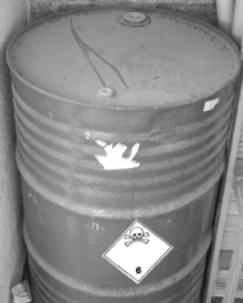
2
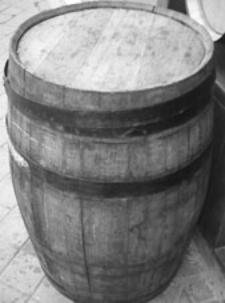
Wood ton
Packs of natural wood, of circular cross-section of a combed wall, made up of duels and backgrounds and equipped with hoops.
3
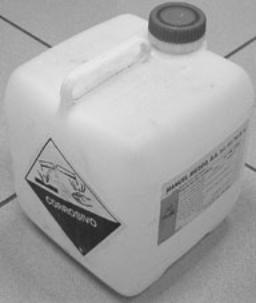
Cocktail ("Jerrican")
Metal or plastic containers, rectangular or polygonal, with one or more holes - for example, those commonly called oil cans.
4
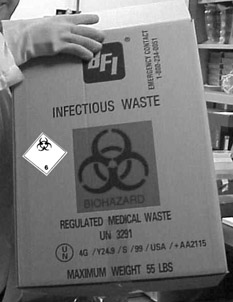
Box
Rectangular or polygonal compact side packings, of metal, wood, plywood, wood agglomeration, cardboard, plastic or other appropriate material.
5
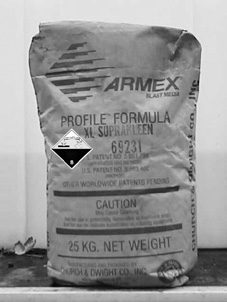
Sack
Flexible packaging or packaging of paper, plastic, textile, woven material or other appropriate material.
6
Composite packaging
Several materials.
0
Light metal packaging
The following capital letters indicate the material:
Initial
Material
A
Steel
B
Aluminium
C
Natural wood
D
Plywood
F
Wood agglomerated
G
Carton
H
Plastic
L
Textile
M
Multi-sheet paper
N
Metal (other than steel or aluminium)
P
Glass, porcelain or stoneware
The packing code is followed, on the markings, by a letter indicating the groups of materials for which the packaging has been authorised, i.e. X for packing groups I to III; And for packing groups II and III; Z for packing groups III.
5. o Separation of materials.
Packages shall not be stowed on or loaded in immediate proximity of packages known to contain foodstuffs, other objects for consumption or animal food on vehicles and at loading, unloading or transhipment sites. Where these packages bearing the above labels are loaded in immediate proximity to packages from which it is known that they contain foodstuffs, other consumer goods or animal food, they shall be separated:
(a) By partitions of complete walls. The partitions shall be as high as the packages bearing the above labels;
(b) Per package not bearing labels in accordance with models Nos 6. 1 ó 6. 2 or 9, or bearing labels conforming to model No. 9 but containing none of the substances listed under items 1, 2, 3 or 13 of Class 9, or
(c) for a space of at least 0,8 m, unless these packages bearing the above-mentioned labels are fitted with additional or fully covered packaging.
(d) Characterization of goods dangerous to the environment. Multilateral Agreement M-80. Vehicles with ADR and RD 2.115/98 certificates. Vacuum-operated cisterns for the transport of hazardous waste.
1o Characterisation of goods dangerous to the environment.
These are the materials in the M6 and M7 subdivisions of Class 9. They include materials presenting the risks according to Section 2. 3. 5 “Tests to determine the ecotoxicity, persistence and bioaccumulation of materials in the aquatic environment” The ADR has already classified the following rules:
M6 Contaminants for the aquatic, liquid environment. UN 3082 liquid substances potentially hazardous to the environment, n.e.p. Among the materials already classified as UN 3082 are:
Poly (3-6) alcohol ethoxylate C6-C17 (secondary).
Poly (1-3) alcohol ethoxylate C12-C15.
Poly (1-6) alcohol ethoxylate C13-C15.
Alpha-cypermethrin.
Butyl phthalate and benzyl phthalate.
Chlorinated paraffins (C10-C13).
1-chlorooctane.
Cresyl and diphenyl phosphate.
Cifluthrin.
Decyl acrylic.
Di-n-butyl phthalate.
1,6-dichlorohexane.
Diisopropylbenzenes.
Isodecyl acrylate.
Isodecyl and diphenyl phosphate.
Isooctyl nitrate.
Malathion.
Resmethrin.
Triaryl phosphates.
Tricresyl phosphates.
Triethylbenzene.
Trioxynil phosphate.
M7 Contaminants for the aquatic environment, solid. UN 3077 solid substances potentially hazardous to the environment, n.e.c. Among the subjects already classified as UN 3077 are:
Chlorhexidine.
Chlorinated paraffins (C10-C13).
P-dichlorobenzene.
Diphenyl.
Diphenyl ether.
Fenbutadine oxide.
Mercurous chloride (calomel).
Tributyltin phosphate.
Zinc bromide.
2. 3. 5 Tests to determine the ecotoxicity, persistence and bioaccumulation of materials in the aquatic environment for classification in Class 9
Acute toxicity to fish.
The purpose of this test is to determine the concentration that causes a 50% mortality in the tested species. This is the CL50 value, i.e. the concentration of matter in water that causes the death of 50% of the group of fish tested for a continuous duration of at least 96 hours. The appropriate fish species are: striped (Brachydanium ryo), fat-headed gobium (Pimephales promelas) and rainbow trout (Oncorynchus mykiss).
Fish are exposed to the test material, which is added to water at varying concentrations (plus a test mouth). The results are done at least every 24 hours. At the end of the 96-hour exposure period and, if possible, during each take, the concentration resulting in the death of 50% of fish is calculated. The no-observed-effect concentration (NOEC) over 96 hours is also determined.
Acute toxicity to aquatic fleas (daphnias).
The aim of this test is to determine the effective concentration of matter in water that prevents swimming to 50% of aquatic fleas (dafnias) (CE50). The appropriate test organisms are daphnia magna and daphnia pulex. Water fleas (Daphnia) are exposed for forty-eight hours to the test substance, which is added to the water at varying concentrations. The no-observed-effect concentration (NOEC) is also determined over 48 hours.
Inhibition of algae growth.
The purpose of this test is to determine the effect of a chemical on the growth of algae under standardized conditions. For 72 hours, biomass modification and algae growth rates are compared under the same conditions, but without the presence of the chemical tested. This results in the effective concentration that reduces by 50% the growth rate of algae (CI50r) and also biomass formation (CI50b).
Easy biodegradability tests.
The purpose of these tests is to determine the degree of biodegradation under normalised aerobic conditions. The tested material is added in small concentrations to a culture broth containing aerobic bacteria. The evolution of degradation is observed for 28 days, determining the parameter specified in the test method. There are several equivalent test methods. Parameters include the decrease of dissolved organic carbon (COD), the release of carbon dioxide (CO2) and the loss of oxygen (O2).
A matter is considered easily biodegradable if the following criteria are met within a maximum of 28 days, less than 10 days after the degradation rate has first reached 10 per cent:
COD decrease: 70 %
CO2 removal: 60 % of theoretical CO2 production
O2 detachment: 60 % of theoretical demand for O2.
If the above criteria are not met, the test may be extended beyond 28 days, but then the result will represent the biodegradability of the subject matter tested. For classification purposes, the result of "easy" degradability is normally required.
When only COD and DBO5 are known, the readily biodegradable test material shall be considered if the ratio
The BOD (biochemical oxygen demand) is defined as the mass of dissolved oxygen necessary for the biochemical oxidation process of a specific volume of matter solution under prescribed conditions. The result is expressed in grams of BOD per gram of subject matter tested. The test, which normally lasts 5 days (DBO5), is conducted according to the standard national test procedure.
COD (chemical oxygen demand) is used to measure the oxidability of a matter expressed as equivalent amount of oxygen of an oxidizing reagent consumed by the matter under specified laboratory conditions. The results are expressed in grams of COD per gram of matter. A standardized national test procedure may be used.
Tests for bioaccumulation capacity
The purpose of these tests is to determine the bioaccumulation capacity by balancing the concentration (c) of matter in a solvent with the concentration of matter in water or the bioconcentration factor (BCF).
The balance ratio between the concentration (c) of a matter in a solvent and in water is normally expressed in log10. The solvent must have negligible miscibility and the matter must not be ionised in water. The solvent normally used is n-octanol.
For n-octanol and water, the result is as follows:
log Pow = log10 [co/cw]
Where Pow is the distribution coefficient obtained by dividing the concentration of matter in n-octanol (co) by the concentration of matter in water (cw). If log Pow = 3.0 the matter has a capacity for bioaccumulation.
The bioconcentration factor (BCF) is defined as the relationship between the concentration of tested matter in fish tested (cf) and the concentration in water tested (cw) at stable state:
BCF = (cf) / (cw).
The test principle is to expose fish to the tested matter, solution or dispersal in water at known concentrations. Tests may be carried out in continuous flow or according to the static or semistatic procedure, depending on the procedure chosen, depending on the properties of the subject matter tested. Fish are exposed to the subject matter tested for a given period, followed by a period without other exposure. During the second period, the increase in water-tested matter, i.e. the rate of excretion or purification, is measured.
(The different detailed testing procedures and the bioconcentration factor calculation method are explained in the OECD Guidelines for Chemical Testing, 305A to 305E, 12 May 1981).
A matter may have a log Pow greater than 3 and a bioconcentration factor less than 100. This would indicate low, even zero, bioaccumulation capacity. In case of doubt, the bioconcentration factor predominates over log Pow, as indicated in the graph reproduced in paragraph 2. 3. 5. 7.
Criteria
A substance may be considered to pollute the aquatic environment if one of the following criteria is met:
the smallest value of CL50 for 96 hours for fish, EC50 for 48 hours for aquatic fleas (daphnias) or IC50 for 72 hours for algae
? is not more than 1 mg/l;
? is greater than 1 mg/l, but not more than 10 mg/l, and the matter is not biodegradable;
? is greater than 1 mg/l but not more than 10 mg/l, and log Pow is more than or equal to 3.0 (except if the experimentally determined bioconcentration factor is less than or equal to 100).
CL50* = 1 mg/l
CL50* = 10 mg/l
Easy matter
degradable
Contaminant of the aquatic environment
Substance that does not pollute the aquatic environment
No
Yes
Yes
Yes
Yes
No
No
Log Pow = 3.0 (except if experimentally determined BCF is less than or equal to 100).
2nd Multilateral Agreement M-80.
Like other multilateral agreements signed by the Competent Authorities to render void in ADR Agreement, they must be carried in the cabin of the vehicle if it is intended to make the journey under these special conditions. It should also be noted in the carrying letter.
This Agreement leaves out the category of environmental hazard materials when the total concentration of such materials is at least 25 per 100 by mass of the solution or mixture.
In violation of the principle of hazardous waste regulations not to mix hazardous waste, for proper management:
Ministry of Foreign Affairs
7707 Multilateral M-80 Classification Agreement
of environmental pollutants
aquatic, as well as its solutions and mixtures,
which cannot be classified in the
classes 1 to 8 or in other sections of
Class 9, repealing certain provisions
Annex A to the Europe Agreement
on the International Transport of Goods
Dangerous by Road (ADR) (published in
the Official Gazette of the Statea number 70,
22 March 2002
Order number M-80. AGREEMENT M 80
Under the 2010 Marginal of A. D. R. Concerning
classification of pollutants from the aquatic environment,
and its solutions and mixtures (such as
preparations and residues), which cannot be classified
in Classes 1 to 8 or in other paragraphs
of Class 9
Notwithstanding the provisions of marginal numbers 2002
(14) and 3320 to 3324 of the ADR, are agreed as follows:
1. 1 Only those materials on which they have been published
appropriate data (e.g. in the context of
the classification programmes used by the Commission
European) may be classified within the numbers
11 and 12 of class 9, in accordance with the provisions of
In the marginal 3325.
1. 2 Only solutions and mixtures containing
one or more materials on which they have been published
the relevant data (see 1. 1 above) and which are compliant
to the criteria of marginal 3325, may be classified
within the numbers 11 and 12 of class 9,
if the total concentration of those materials is at least
equal to 25 per 100 by mass of the solution or the
mix.
2. This Agreement shall apply to transport
in the territories of the Contracting Parties
of the ADR who signed it. In the case
that it is revoked by one of the signatories, only
shall apply to transport carried out in
the territories of the Contracting Parties to the ADR which
have signed this Agreement and have not revoked it.
In Madrid on 26 December 2001.
The competent authority for the ADR in Spain,
Juan Miguel Sánchez García.
Signatory countries
Germany.
Austria.
Belgium.
Denmark.
Slovakia.
Spain.
Finland.
France.
Italy.
Liechtenstein.
Norway.
The Netherlands.
Portugal.
United Kingdom.
Czech Republic.
Sweden.
Switzerland.
What is made public for general knowledge.
Madrid, April 4, 2002. –The Secretary General
Technical, Julio Núñez Montesinos.
3. o Vehicles with ADR and RD 2.115/98 certificates.
On the other hand, it is necessary to be in the . . . code of the column . . . of Table A of Chapter 3 of the ADR in order to adapt the vehicle with the devices required for that particular mode of transport, even if it does not have a certificate of approval, it must meet the prescribed technical characteristics.
Base vehicle depending on the form of transport.
Guy.
ADR label.
Risk
Initial in English.
Base-ass vehicle.
Solids, liquids, or gas in tanks.
Column 14 Table A
A C D I M
O P S SR T W
(No risk F)
AT
F
FL
Only UN 2015
O
OX
In packages and
solid bulk.
(Explosive)
EXII
EXIII
A C D F I
M O P S SR T W
He doesn't have one.
Radioactive
Radioactive
He doesn't have one.
Base vehicle
Specifications
TECHNICAL
EX/II
EX/III
AT
FL
OX
9. 2. 2
Electrical equipment.
9. 2. 2. 2
Power stations.
X
X
X
X
9. 2. 2. 3. 1
Battery disconnector.
X
X
9. 2. 2. 3. 2
Battery disconnector.
X
X
9. 2. 2. 3. 3
Battery disconnector.
X
9. 2. 2. 3. 4
Battery disconnector.
X
X
9. 2. 2. 4
Batteries.
X
X
X
9. 2. 2. 5. 1
Circuits with permanent power supply.
X
9. 2. 2. 5. 2
Circuits with permanent power supply.
X
9. 2. 2. 6
Electrical installation at the back of the cab.
X
X
9. 2. 4
Fire risk prevention.
9. 2. 4. 2. 1
Cabin.
X
X
9. 2. 4. 2. 2
Cabin.
X
9. 2. 4. 3
Fuel tanks.
X
X
X
X
9. 2. 4. 4
Engine.
X
X
X
X
9. 2. 4. 5
Escape device.
X
X
X
9. 2. 4. 6
Vehicle resistance brake.
X
X
X
X
9. 2. 4. 7
Combustion heating.
9. 2. 4. 7. 1, 9. 2. 4. 7. 2,9. 2. 4. 7. 5
Combustion heating.
X
X
X
X
X
9. 2. 4. 7. 3,9. 2. 4. 7. 4
Combustion heating.
X
9. 2. 4. 7. 6.
Combustion heating.
X
X
9. 2. 5
Speed limitation device.
X
X
X
X
X
9. 2. 6
Tow coupling device.
X
X
Within the vehicles authorised for dangerous goods, we find that in the case of explosives or tanks, no approval of the type of vehicle - i.e. transport in solid packages and bulk is necessary. Chapters 9. 1, 9. 2 y 9. 7. 2 of the ADR refer to the vehicle to be used, as indicated in column (14) of Table A of Chapter 3. 2. l.
In any case, the transport of explosives (and their waste) must be carried out in vehicles with EXII or EXIII conditions. The rest of transport in packages does not require a special base vehicle.
Within the tanks we can find a wide variety of models, having each manufacturer to conform to chapters 9. 1, 9. 2 y 9. 7. 2 concerning the vehicle to be used, as indicated in column (14) of Table A of Chapter 3. 2. l. All tanks must be approved in order to be authorised for the transport of each dangerous product on the vehicle concerned.
The tanks will have FL codes – for flammable - OX – for hydrogen peroxide or AT for the rest. In addition, each product requires a tank with special conditions, which is assigned an alphanumeric code corresponding to a type of tank conforming to 4. 3. 3. 1. 1 (for Class 2 or 4 gases). 3. 4. 1. 1 (for classes 3 to 9). This type of tank corresponds to the less severe provisions for tanks accepted for the transport in ADR tanks of the matter concerned. The codes corresponding to other types of approved tanks are set out in paragraphs 4. 3. 3. 1. 2 (for Class 2 gases) or 4. 3. 4. 1. 2 (for the subjects of Classes 3 to 9). If no code is indicated, transport in ADR tanks is not permitted.
If a solid matter (S) or liquid (L) tank code is indicated in this column, it means that the material concerned can be transported in a solid or liquid state (melted). This provision is generally applicable to matters whose melting point is between 20 and 180°C.
The general provisions concerning construction, equipment, type approval, controls and testing and marking not indicated in this column are set out in 6. 8. 1, 6. 8. 2, 6. 8. 3 y 6. 8. 5. The general provisions concerning use (e.g. maximum filling level, minimum test pressure) are set out in paragraphs 4. 3. 1 a 4. 3. 4.
A letter “(M)” after the tank code indicates that the material can also be transported on battery vehicles or CGEM.
A “(+)” after the tank code means that alternative use of tanks is not permitted and the tank hierarchy in 4. 3. 4. 1. 3.
For tanks made of fiber-reinforced plastic material, study is required on 4. 4. 1 and chapter 6. 9; for empty waste tanks, see 4. 5. 1 and chapter 6. 10.
4. o Vacuum-operated cisterns for the transport of hazardous waste.
Chapter 6. 10 of the 2003 ADR contains provisions on construction, equipment, prototype approval, controls and marking of vacuum-operated waste tanks. In the varieties of fixed tanks, disassembled tanks, tankers and mobile cisterns. They can suck liquid, pasty or solid waste with positive pressure or negative pressure devices, i.e. by injecting another material to push the waste into the tank or by pumping the residue from the tank itself.
wastes that can be transported in vacuum tanks.
ADR label
Class
Initial
Waste
4. 1 / 3
F
Inflamable solids or liquids.
5. 1
O
Comburent.
6. 1
T
Toxic.
6. 2
I
Infectious.
8
C
Corrosive.
9
M
Diverse hazardous materials.
It follows that they cannot be transported in this type of vehicle : Class 1 - explosive waste, which although not waste is prohibited to be transported in any type of tank. Class 2 - gas residues. Class 4. 1 - self-reactive waste and desensitized explosive waste. Class 4. 2 - residues of materials susceptible to spontaneous inflammation Class 4. 3 - residues of substances which, when in contact with water, release flammable gases. Class 5. 2 - organic peroxide residues. Class 7 - radioactive waste.
They may be equipped with:
• Removable funds.
• Internal piston for easy cleaning or emptying.
• Aspiration fishers.
• Supplementary service equipment.
• Device to recover vapors.
• Flame-return switch off and anti-return devices.
• Pressure gauge / adequate depression.
TrafficADR (2001-2022) ISBN: 84-688-7476-0 2004.- © Home info@dgsa.es Privacy Policy and Legal Notice